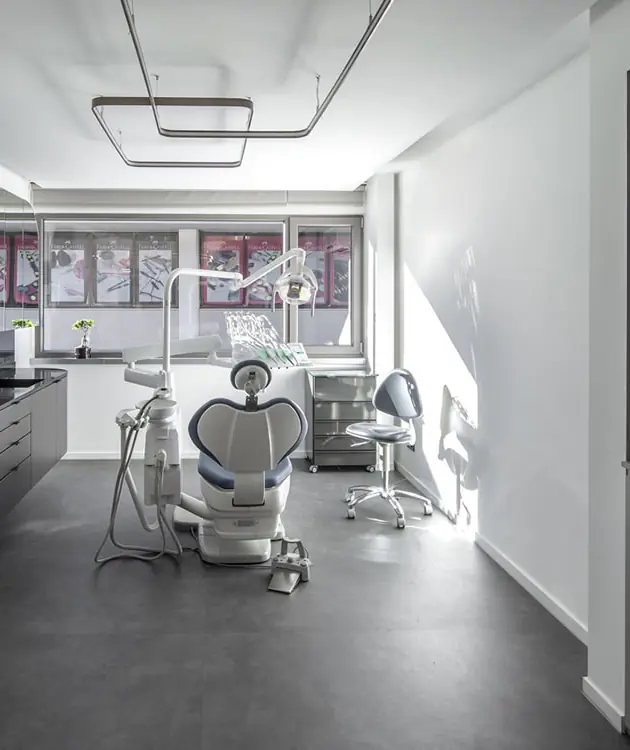
Fixed braces
Brackets are small attachments bonded to the tooth surface. The wire running through them applies a light, continuous force to the teeth.
ReadKlinik 29 · AltunizadeMon, Tue, Wed, Fri 09:00–19:00Saturday 09:00–16:000216 474 47 40WhatsApp 0552 574 47 40

Common questions in orthodontics, short and referenced.
This page gives people considering orthodontic treatment, and their families, a general framework. Each section explains what a method is, who it is considered for and what to watch for.
The articles are general. The right method for you is decided after the examination and records. No duration or outcome is promised.
The scientific sources used are listed under each section.
Brackets are small attachments bonded to the tooth surface. The wire running through them applies a light, continuous force to the teeth.
Read
Clear aligners are thin, removable trays that fit over the teeth. Each tray moves the teeth one small planned step.
Read
An examination while both baby and permanent teeth are present can reveal growth-related problems early.
Read
Teeth can be moved at any age. What matters most is the health of the bone and gums that support them.
Read
Marked differences in jaw size or position may not be correctable by moving teeth alone. In that case orthodontics and jaw surgery are planned together.
Read
When braces or aligner treatment ends, teeth tend to return toward their old positions. Retention limits this.
Read
Lingual brackets are bonded to the tongue side of the teeth. They cannot be seen from the outside.
Read
A mandibular advancement device is a two-part splint worn during sleep that holds the lower jaw slightly forward. It aims to help keep the upper airway open.
Read01/ 08
The bone around a tooth remodels under steady pressure. The wire provides that pressure, and the tooth moves slowly through the bone.
Wires are changed or adjusted at check-ups. Keeping forces light protects the tissues and makes movement more predictable.
Photos of the face and teeth, impressions or a digital scan and X-rays are taken. The plan is based on these records.
Any decay or gum inflammation is treated first. Teeth with braces take more effort to keep clean.
Tenderness of the teeth and rubbing on the cheeks are common in the first days and usually ease within a few days.
Brushing after every meal, using interdental brushes and avoiding hard or sticky food protects the brackets and teeth. If a bracket comes loose, let the clinic know. The timing of the repair depends on the situation.
Poor cleaning can lead to white spots and decay around the brackets. The gums may swell and bleed.
Some shortening of the root tips may occur as teeth move. This is usually mild. After treatment, teeth tend to drift back, which is why retention matters.
Bonding is painless. Pressure and tenderness may be felt over the next few days.
Usually every few weeks. The interval depends on the wire and the stage of treatment.
A mouthguard is advised for contact sports. Wind instruments may need a short adjustment period.
02/ 08
The teeth are scanned digitally. The target position and the steps in between are planned on a computer. The clinician reviews and adjusts this plan.
Small tooth-coloured bumps are added to some teeth so the trays can grip them better.
It is considered for people who can wear the trays consistently and keep good oral hygiene. Some movements, such as extruding teeth or large root movements, are harder to control.
Aligners alone may not be enough for complex skeletal problems. The choice is made after the examination and records.
Aligners are usually worn 20–22 hours a day. They are removed to eat and to drink anything other than water. Teeth are brushed before putting them back.
A new tray may feel tight for a day or two. Trays are cleaned with cold water because hot water can distort them.
If the trays are not worn enough, the teeth do not follow the plan and a mid-course correction may be needed. Sugary drinks with trays in raise the risk of decay.
Root shortening and relapse after treatment can occur, as with fixed braces.
They are thin and transparent, so most people will not notice them unless they look closely.
A slight lisp is possible in the first days. Most people adapt quickly.
Teeth may move away from the plan. Long breaks may require a new plan.
03/ 08
A child's jaws are still growing. Some skeletal and dental problems are easier to guide at this stage.
An examination is also about monitoring. Often the advice is simply regular check-ups.
In children with a narrow upper jaw and back teeth biting the wrong way, appliances that widen the upper jaw may be used.
When the lower front teeth bite in front of the upper ones, appliances such as a face mask can improve the jaw relationship in the short term. Evidence on long-term effects is limited.
In children with very prominent upper front teeth, early treatment may lower the risk of injury to those teeth. The final result is usually not clearly different from a single course of treatment in adolescence.
Mouth breathing, a long-lasting thumb-sucking habit, baby teeth lost very early or very late and the jaw shifting sideways when biting are signs worth noticing.
These signs do not necessarily mean there is a problem. An examination is enough to check.
Early treatment often does not remove the need for a second course of fixed braces. This is discussed with the family from the start.
Regular wear of appliances and attending check-ups directly affect the result.
Without delay if there is a specific concern. Otherwise the mixed dentition stage, when the front teeth and first permanent molars have erupted, is a suitable time.
No. For most children the advice is monitoring. Treatment is considered when waiting would be a disadvantage.
Some appliances are worn only at home and at night. Children usually get used to fixed ones quickly.
04/ 08
Some people had no chance of treatment as children. Others find their teeth have shifted again after earlier treatment.
Tilting of teeth next to a gap and making space for an implant or bridge are also common reasons.
Gum health is assessed before treatment. Any active gum disease is treated and brought under control first.
Teeth with reduced bone support can still be moved. Forces are kept lighter and progress is monitored together with the gum specialist.
Fixed braces, tooth-coloured brackets and clear aligners are all used in adults. The choice depends on the problem and the person's expectations.
Small screws placed in the jaw may support some movements.
Teeth may respond a little more slowly in adults. Retention after treatment is usually planned for the long term.
Where gums have receded, small triangular gaps may appear between teeth once they are aligned. This possibility is discussed in advance.
No. If the teeth and gums are healthy, treatment is possible later in life.
On most surfaces, yes. Different bonding methods are used for ceramic and metal surfaces.
Tooth-coloured brackets or clear aligners reduce visibility. Check-ups are usually short.
05/ 08
It may be considered in adults whose lower jaw is clearly forward or back, whose front teeth do not meet, or who have a noticeable facial asymmetry.
Difficulty chewing or speaking and expectations about facial appearance are both part of the assessment.
Over the years the teeth may have tilted to compensate for the jaw mismatch. Pre-surgical treatment removes this tilt.
During this stage the bite may look worse for a while. This is expected.
The orthodontist and the jaw surgeon review the records together. Most planning is now done on 3D images.
The surgical method, hospital stay and recovery are explained separately by the surgeon.
After the first weeks of healing, orthodontic treatment resumes. The final details of the bite are completed in this stage.
Jaw surgery has its own risks. One of them is altered sensation of the lip and chin, which may be temporary or permanent. The risk is assessed at the surgical consultation according to the planned operation and the person.
If the difference is mild, the teeth may be positioned to compensate. The limits of this option are discussed at the examination.
Orthodontics before and after surgery together often takes around one and a half to two years. It varies from person to person.
In some cases preparation for surgery can use aligners. Fixed braces are more often preferred.
06/ 08
The fibres and gums around the teeth need time to adapt to the new position. During this time teeth can easily drift back.
Mild crowding of the lower front teeth with age is a natural change that also occurs in people who never had treatment.
A bonded retainer is invisible and does not depend on the patient remembering it, but it must be cleaned carefully. The wire can break or come loose.
Removable retainers are easy to clean but only work when worn. Evidence on which method is better is not yet conclusive.
Periodic check-ups continue during retention. A broken wire or cracked retainer found early can be repaired before teeth shift.
A retainer that starts to feel tight may be a sign that the teeth are moving.
Longer at first, then usually only at night. The duration is decided individually.
Contact the clinic. If repair is delayed, teeth may shift.
Some teeth may gradually return to their old position. The risk varies from person to person.
07/ 08
Impressions or a digital scan are taken. Brackets and wires are made in a laboratory on this model and bonded to the teeth with a transfer tray.
Custom manufacture helps compensate for differences in the shape of the inner tooth surfaces.
The tongue touches the brackets, so some sounds may change and the tongue may feel sore at first. For most people this eases within a few weeks.
Cleaning needs more care because the brackets are out of sight. A mirror and interdental brushes help.
It is considered for people who do not want visible braces but prefer the control of a fixed appliance. Very short tooth crowns or some bite types can make it harder.
The choice is made after the examination and records.
There may be a slight effect in the first weeks. Most people adapt over time.
With both methods the duration depends on the problem. It varies from person to person.
08/ 08
It is considered for people diagnosed by a sleep physician with simple snoring or sleep apnoea who have been advised to try an oral appliance. The teeth and gums must be able to support it.
For severe sleep apnoea CPAP is usually the first choice. The sleep physician decides which treatment is suitable.
Impressions or a scan are taken and the appliance is custom made. How far the lower jaw is advanced is adjusted gradually at check-ups.
After adjustment, the effect is assessed with a sleep study recommended by the physician who made the diagnosis.
Morning jaw or tooth tenderness, dry mouth or increased saliva may occur. Long-term use can change the bite.
For this reason people using an appliance are followed regularly by both the dentist and the sleep physician.
A sleep physician should first check whether the snoring is a sign of sleep apnoea.
In some patients it can. The decision is made with the sleep physician based on test results.
These articles give a general framework and do not replace an examination. If a brace or appliance causes a bleeding sore, severe pain or rapidly increasing facial swelling, contact the clinic or the nearest emergency department without delay.
Last updated: 22 October 2026